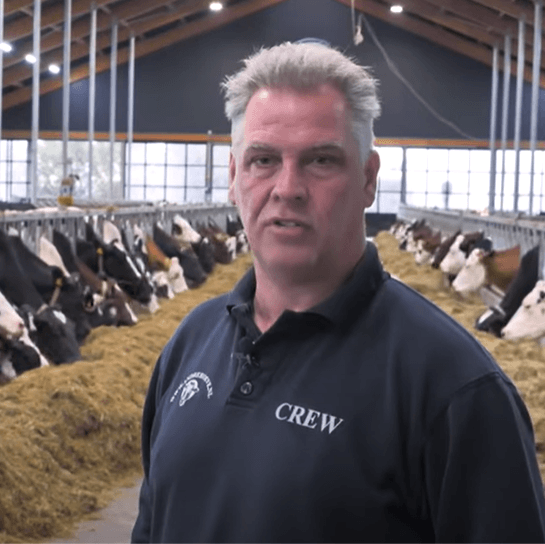

Testimonial Pieter Voet
Reducing methane emissions is therefore an important and also necessary part of sustainability.
Pieter Voet runs a dairy farm together with his brother Bart in Schaijk in Brabant (the Netherlands). After their intern investigated Jumpstart for his final assignment, they discovered the sustainability potential of the mono-register. In 2020, they bought a mono-register with a mineral separator. “Why is that important? I also want to give my children a good future,” emphasises Pieter Voet.
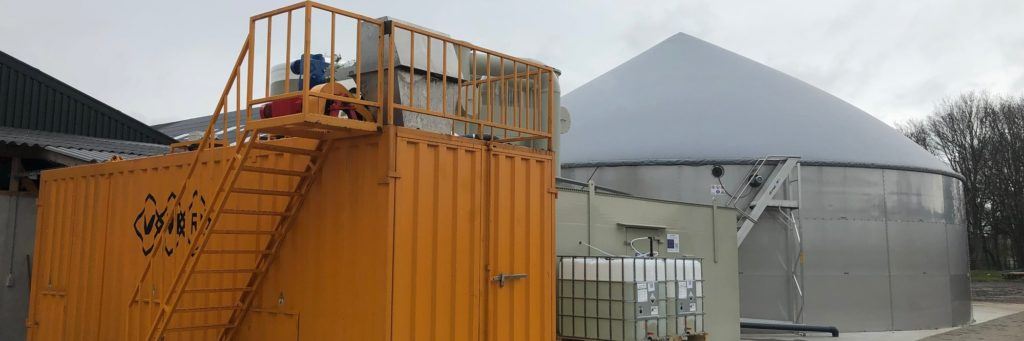
De monovergister met mineralenscheider is een mooi voorbeeld van kringlooplandbouw
70% methane reduction
“If the daily fresh manure from our cows is left in a pit next to the barn for a long time, the metahane is released. The mono-fermenter captures the methane, which greatly reduces emissions,” says Voet. Methane contributes to the increase in the greenhouse effect caused by humans. Reducing methane emissions is therefore an important and necessary part of sustainability.
Nitrogen reduction
The manure enters the mono-fermenter and is separated into a thick and a thin fraction. The bacteria in the thick fraction are dead and the manure can be spread in the stables. Meanwhile, the thin fraction has become so fine that it can be used on the land again. The other day, brothers Pieter and Bart had the slurry sampled, Voet explains: “The slurry contained 4.5 kilograms of nitrogen. After washing in the mono-fermenter with mineral separator, this is reduced to 2.2 kilograms of nitrogen per cubic metre. The engines have to heat up a little more, so more heat is released and we can wash out the nitrogen even more. So we reduce the nitrogen content and get electricity and heat in return. We use the heat and water in the stables and with the electricity generated we supply 40 homes with electricity. The people in the village are interested in this process and respond positively; jokes are already being made about laying cables between their homes and our digester.”
Recycle
Because the Voet family dairy farm has little land but wants to become more sustainable, the mono-fermenter with mineral separator enables them to become more sustainable within the company. “Both the phosphate and the nitrogen can be used in our own business. That is a good example of circular agriculture. Like many other farmers, we see the challenge of nitrogen limits, but this is not easy to solve. I see it this way: you can either do nothing or look ahead and think about the best solutions,” concludes Voet.
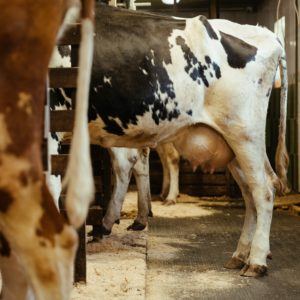
Dairy farm Voet V.o.f.
Schaijk, Noord-Brabant
Brothers Pieter en Bart Voet
300 milkcows
“The response from local residents has been very positive.”
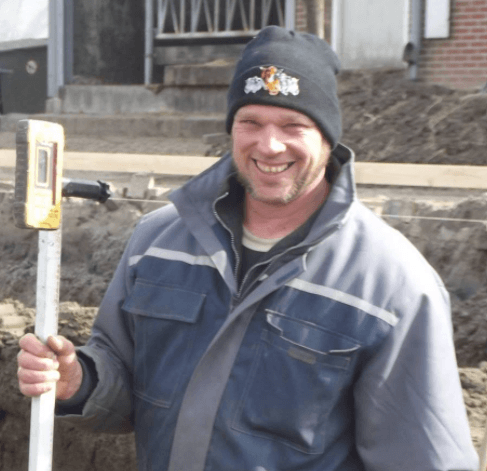
Henrie Kloosterboer
Dairy Farmer (NL)
“There is a revenue model.”